
Meatless Charcuterie: Charlito’s Cocina Fig Salami
“It was born out of a real fascination I have with the way foods were preserved before industrial methods of preservation. I was fascinated by the way you can take a piece of food, and with the right amount of salt, time and temperature, not only could you make it last a really long time, but you could make it taste very good.”
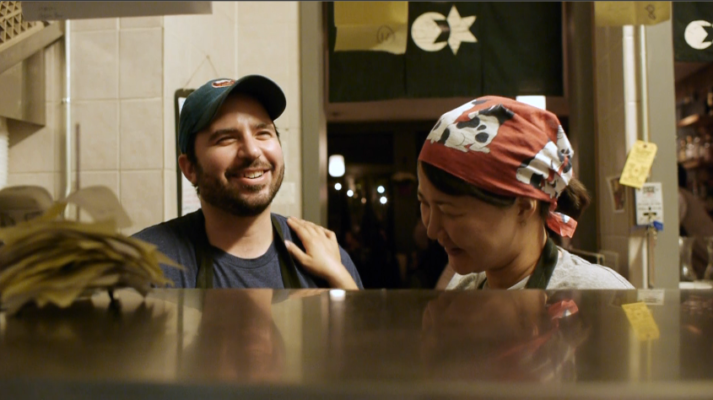
Meet Charles Wekselbaum, the founder and head salami maker of Charlito’s Cocina, a made-by-hand, artisan charcuterie business based in Long Island City, Queens. Charles, or Charlito (as he’s affectionately known), is a master charcutier. He is one of a handful of artisan salami makers in New York City. Yet, believe it or not, his business launched in the summer of 2011 with an entirely meatless product: the fig salami, an artisan product loved by vegans and meat lovers alike.
The fig salami was invented out of necessity. Even though Charlito spent years perfecting the art of preserving meats, New York City made it difficult for him to legally start his meat production. So, instead of giving up, he improvised. By using the same principals he applied to meat, Charlito began making a meatless charcuterie product, re-shaping figs to look like salami. It was a first, and like most first times, a lot of booze helps.
Enjoy his fun story! To try Charlito’s fig salami you can visit his stand at Smorgasburg, or check out his website to see all specialty shops and markets that carry his products.
Thanks so much for watching food. curated.! Happy Eating!
Eating Goats to Save Them: Heritage Foods USA’s — No Goat Left Behind Manifesto
“Goat meat is qualified as ‘OTHER’. Unfortunately, it makes it seem exotic, a little scary, a little unfamiliar, but it shouldn’t be. Goat is delicious.”
Meet Erin Fairbanks, the project coordinator of No Goat Left Behind, a passion-driven effort to get every day diners, cooks and chefs – like you and me – to add goat meat to our diets. What Erin is trying to do, by partnering with 14 family farms across the northeast, is start a movement. She wants to encourage us, even tempt us (in a delicious way), to eat more goat meat for a good reason: to help dairy farmers save young, male goats from having a life they wouldn’t be proud of.
The hard truth is: to get more goat milk for goat cheese, farmers need to breed more female goats to have babies. Unfortunately, after they’re born, baby boys or baby bucklings, have no role on a dairy farm. So, most farmers are faced with difficult choices; but, it doesn’t have to be that way. To tell this story, I visited Angela Miller, the owner of Consider Bardwell Farm in Vermont, to see how the life of a baby buckling could be, if we all decided to give goat meat a go. Good dairy farmers want their goats to begin and end their life on the farm, but it’s costly, and not possible unless they find more people willing to try goat meat. So far, it’s been difficult for these farmers to find consumers willing to pay the money for a meat less well known. It’s a big reason why I wanted to tell and share this story, to help support this movement. Goat meat deserves a lot more attention. Come see why.
For the entire month of October, Heritage Foods USA will make it easier for us to access artisan goat meat. Many restaurants around the city have optioned to put goats on their menu to directly benefit these local dairy farms. You can try different takes on goat meat prepared for you by different chefs. In addition, if you prefer to cook yourself, you can sign up at the Heritage Meat Shop in Essex Street Market to try one of several goat breeds they’ll be selling at their counters or order online. It’s a win-win project we can all help in by participating. I hope you do! It’s a fun reason to get a few friends together to support good ideas and try something new.
Participating NYC restaurants include: Back Forty West, Minetta Tavern, Union Square Cafe, Momofuku Noodle Bar, Parish Hall, Fette Sau, Otto, Felidia, M.Wells, Lupa, Court Street Grocers, Roberta’s, Vinegar Hill House, Blue Smoke, Northern Spy Food, Palo Santo, Tia Pol, Babbo, Gramercy Tavern, plus many more listed here.
Thanks so much for watching and supporting food. curated.! I hope you report back and tell me what you think about goat meat. Happy eating!
Brooklyn Bouillon: Treating Bones Like the Gold of an Animal
“A small farm has to be creative in how they manage their resources.”
Meet Rachael Mamane, the founder of Brooklyn Bouillon, the first sustainable and traceable small-batch artisan stock company based in Brooklyn, NY. Rachael is on a personal mission to help small farmers. A few years ago, when she was working for the greenmarkets in New York City, she had the idea to help meat farmers generate extra income by creating a line of stocks from their unwanted “waste”, such as discarded bones. It was an opportunity no one had seized on. Rachael noticed that none of the local farm stands offered a high-quality stock to home cooks on a consistent basis; a skill she had a knack for, cooking whole animals nose-to-tail throughout her life. So, she approached a few small farms with the idea, tested out a number of stock recipes using their raw materials, and in 2010, Brooklyn Bouillon was born.
What I learned from Rachael is that a good stock, and I mean a really good stock, takes a lot of TLC. I spent close to 12 hours in her commercial kitchen in Sunset Park watching her charmingly, geek out over flavored water. For her, making stocks was a therapeutic and rewarding process: one that involved hours of slowly removing impurities, roasting and adding aromatics at just the right moment, and straining and straining until the stocks reached a pure liquid form. I’ll admit, I was in awe of them. Each batch looked rich, thick and full of all those good things that make us believe soups are cure-alls. The reductions looked beautiful too – a quality achieved through using specific vegetables to add color. Watching the whole process made me sad I always took the easy way out. Which is why I’m really excited to share this process and inspiring company with you. Like me, you may not want to buy canned or boxed up stock at the supermarket ever again.
Enjoy Rachael’s story! If you are interested in picking up a batch, you can connect with Rachael here on her website. She’ll have them stocked up at specialty stores in Brooklyn and at the greenmarkets in a few weeks.
Brooklyn Bouillon’s Current Product Line:
Basic Stock
Pasture-Raised Chicken Stock
Grass-Fed Beef Stock
Local Fish Fumet
Organic Vegetable Stock
Specialty Stock
Cage-Free Duck Stock
Heritage Breed Pork Stock
Local Seafood Stock
Wild Mushroom Stock
Gourmet Demi-Glace
Cage-Free Veal Demi-Glace
Roasted Root Vegetable Demi-Glace
Thanks so much for watching and supporting food. curated. and local food artisans! Happy eating!
Katchkie Harvest Ale Now on Tap
Calling all seasonal beer lovers out there…
To follow up on the farm to keg beer story I posted about last week, I just learned that Captain Lawrence Brewery has finally delivered their seasonal harvest ale to the following spots around New York City. It’ll only be on tap for a very short time, so I hope you head out to try this very special squash & pumpkin ale, and see for yourself how fresh roasted produce can really add depth and body to a beer. According to Scott the Brewmaster, the ale turned out rich, roasty and very tasty!
MANHATTAN
- The Growler
- The Ginger Man
- Blind Tiger
- Eataly Birreria
- The Guilty Goose
- The Pony Bar (Hell’s Kitchen)
- Pony (UES)
- Spring Lounge
- Merrion Square (UES)
- Whole Foods Bowery
- Bar Great Harry
- 61 Local
- Spuyten Duyvil
- Bierkraft
- Terroir
- Barcade
- Kent St Ale
- Mission D0lores
- Strong Place
- Alewife
- The Lark
- Ferro Beverage
- Beer City
- The Good Life
- TJ Finley’s
- The Tap Room
Hit me up at @SkeeterNYC if you want to meet up and try it together. ‘Tis the season! Enjoy!
A Farm to Keg Beer: Captain Lawrence Brewery’s Katchkie Harvest Ale
“Getting access to fresh harvested, pureed roasted pumpkin is not an easy thing, and I don’
t think there are a lot of businesses that have the facility on site to do it.”
I’ve never really thought about what actually goes into a pumpkin ale. I guess, I thought it was just a blend of spices that gave the beer its signature flavor. Until now. Meet the team behind Katchkie Harvest Ale, a collaboration between Captain Lawrence Brewery, Executive Chef Robb Garceau of Great Performances and Katchkie Farm. Katchkie Harvest Ale is the brewery’s first attempt to develop a pumpkin ale utilizing fresh, local pumpkins…and squash. Over 300 pounds of roasted puree, in fact!
So enjoy this peek into the making of a true farm to keg beer. It’ll be available for a limited time this October in select bars and restaurants around New York City. Let me know if you’d like to head out and try it! The beer needed a few weeks to ferment after I came in to film the process, so I’m as excited as you are to try it. Enjoy the fall season.
Thanks for watching food. curated.! Happy Drinking!